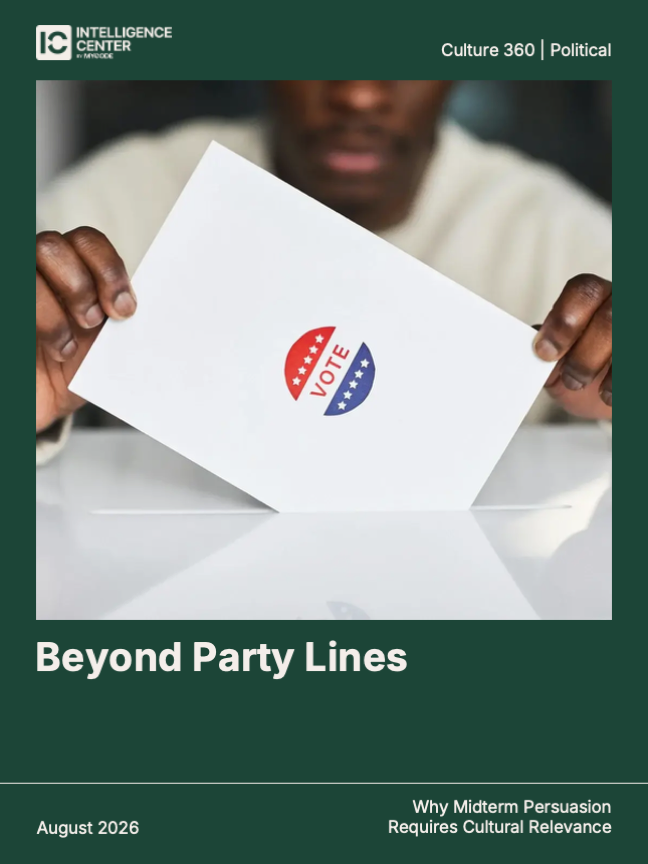
Beyond party lines: What voters need before persuasion can begin
Getting a political message in front of voters is only the first step. Relevance determines whether it feels worth hearing.
My Code’s latest Culture 360 Political Research shows that party affiliation remains an essential starting point, but it is not a complete strategy. Voters are entering the 2026 midterm cycle carrying pressures around affordability, jobs, healthcare, immigration, and safety. Multicultural identity and generation reveal how personally those issues are experienced and where broad party patterns begin to shift.
Immigration becomes more consequential when policy connects directly to family and community. Political silence may reflect concern about retaliation, backlash, or professional consequences rather than a lack of interest. And while stability matters, voters also want a credible sense of hope about what comes next.
Through its Intelligence Center, My Code’s cultural intelligence combines quantitative research, qualitative community insight, and cultural listening to show not only where voters stand, but what they need to hear and feel before they are willing to listen, consider, or engage.
Reach can find voters.
Relevance gives them a reason to listen.
In this Culture 360 Political Research Executive Summary:
Why Party Affiliation is necessary, but not enough when multicultural identity and generation change the read
How financial pressure and issue proximity shape political relevance across multicultural voter groups
Why lower political visibility should not be mistaken for lower interest
How safety, understanding, and messenger permission affect persuasion
Why credible hope may matter alongside messages of stability and protection